


This is what we understand by oil analysis service: Take an oil sample, apply the oil sampling set and then use it for analysis. The transformer insulating oil analysis starts with the correct procedure of oil sampling according to DIN EN 60422. For oil analysis it is important to select the appropriate oil sampling set. Whether aluminium bottle or glass syringes in a transport case, the oil samples are selected according to the analysis requirements. Standardized procedures such as Gas-in-Oil Analysis for the condition assessment of transformers.
The oil samples are the DNA of a transformer. There are some key gases that we look for in a dissolved gas analysis (DGA). Some other tests are also performed such as dielectric breakdown voltage, acid neutralisation number, interfacial tension or water in insulating liquids to name a few. Therefore, oil sampling must be carried out carefully
Viscosity and purity tests are important for checking lubricants. At your request, we assess operating fluids such as lubricants, oils, insulating oils, turbine oils, coolants and hydraulic oils. The oil analysis to be carried out does not end with the test results. If desired, you will receive solution-oriented assistance from us. Our know-how with quality and competence for your operational practice. If you would like to know more about these topics, visit our practical seminars.
We offer you advice on the topics of: Oil sampling | Oil analyses | Oil ageing | Oil service.
Density Meter | Digital Hydrometer
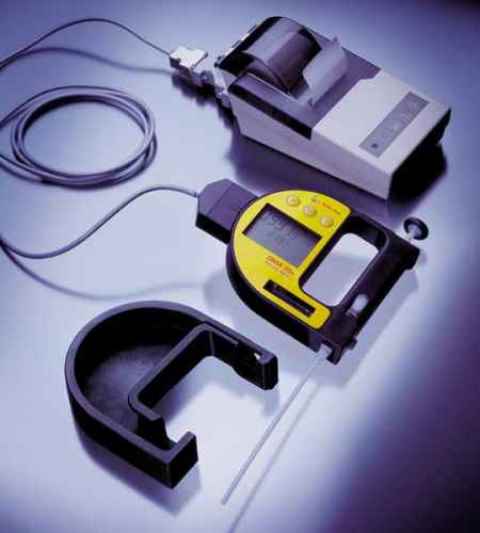
The portable density meter is ideal for beginners. It measures sample density directly and easily on-site. Using the built-in pump, the device draws samples from the storage container and instantly displays the results—either as density or as concentration in units like °Brix, %v/v alcohol, or %w/w H₂SO₄ (sulfuric acid). Thanks to its lightweight and compact design, the measuring device is also suitable for hard-to-reach samples, such as batteries in tight shelves or wine samples from stacked barrels.
Technical Highlights of the Density Meter Compared to the Glass Hydrometer
- Minimal Sample Volume: Only 2 ml of sample is needed, helping to avoid sample waste.
- Direct Sample Collection On-Site: The built-in pump draws samples directly from the container, simplifying the process.
- Integrated Conversion Table: Results are displayed directly in preferred units, eliminating the need for extra calculations.
- Wide Measurement Range: This device can replace a full set of hydrometers.
- Automatic Temperature Compensation: Results are precise and reliable within seconds.
- Efficient Data Management and Easy Transfer: Stored results can be automatically transferred, eliminating manual note-taking.
- Consistent Results: The results are reliable and consistent, regardless of user experience.
- Lightweight and Robust Design: This allows for easy transport and safe storage.
This device is the lightest of its kind on the market. Its slim design allows it to fit into narrow spaces, such as wine cellars or battery production facilities. A protective case, rubber housing, and shoulder strap make the device ideal for safe on-site use. It is leakproof (IP54) and reliably resists sample splashes. The chemical resistance of sample-contacting parts has been thoroughly tested, protecting the device from the effects of solutions and acids for a long-lasting lifespan.
Smart Features for an Optimized Workflow
The device includes a backlit display and an illuminated measuring cell, making it easy to use even in dark environments. Sample IDs can be saved and assigned to sampling locations. Stored results can be conveniently printed or exported via the IrDA interface, enabling quick and efficient data processing.
We are happy to advise you on topics related to: Lead Batteries | Battery cells | Battery testing
DC Ground Fault | GFL1515 | Battery Ground Fault
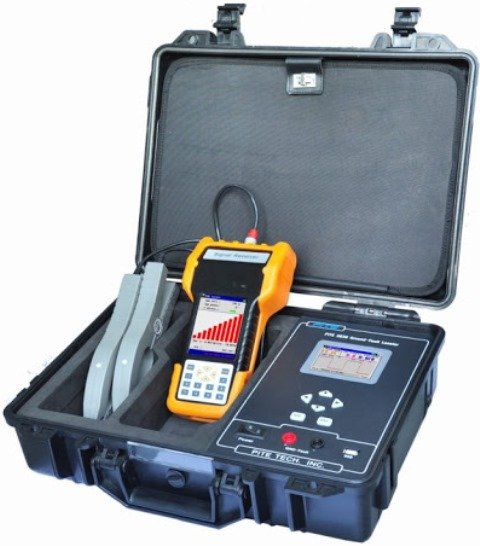
GFL1515: Essential for Detecting DC Ground Faults in DC Systems
The GFL1515 is an essential measuring device for detecting DC ground faults in various DC systems. This GFL1515 Detector is crucial for identifying faulty grounding, especially where electrical cables are damaged or show leakage to the ground.
Fault Detection Through Signal Injection
The GFL1515 detects unintentional DC ground faults by injecting a low-frequency signal into the faulted polarity. Using current clamps and a portable receiver, operators can follow this signal to pinpoint the physical location of the DC ground fault.
Online Measurements with High Voltage Tolerance
The GFL1515 enables measurements even in online DC systems. While the device’s output current remains low, its output voltage can reach up to 1000V, allowing it to function safely without interference. Per the NERC PRC 002-6 standard, the battery and DC power system must be checked for unintentional grounding every four months. If a ground fault is found, the GFL1515 allows for precise fault localization without disconnecting the live circuit.
Method for Fault Localization
The GFL1515 uses several methods to locate faults accurately, based on these principles:
Signal Generator and Return Circuit
The signal generator connects to the DC system with two test leads, injecting a low-frequency current signal. This signal flows through the circuit, exits at the faulted grounding point, and finally returns to the generator. This return circuit assists in signal tracing in the next step.
Signal Receiver for Directional Tracking
The signal receiver tracks the signal’s direction, which always points toward the fault. Using one clamp on two busbars, or two clamps on separate busbars, the device works efficiently with strong anti-interference capability, even in online systems.
Signal Strength and Phase Angle Changes
The strength and phase angle of the signal change significantly before and after the grounding fault. These changes help pinpoint the exact fault location with accuracy.
We are happy to provide further guidance on the topics: Battery Ground Fault | Ground Fault DC | DC Ground Fault.
Battery Condition Analyzer | BTA 200 | Stationary Batteries
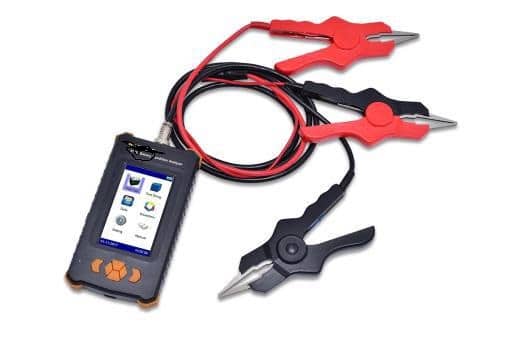
Introduction to the BTA 200 Battery Condition Analyzer
The BTA 200 Battery Condition Analyzer is an advanced device specifically designed for the precise monitoring of battery health. Stationary batteries, especially those used in critical applications such as emergency power supply systems, benefit greatly from this device. The BTA 200 combines modern technologies to ensure that batteries function optimally.
Measuring Internal Resistance
One of the key functions of the BTA 200 is the measurement of internal resistance in batteries. This measurement is crucial as it assesses the condition of the battery electrodes and the stability of the cell structure. In emergency power systems, where a stable energy supply is essential, internal resistance measurement plays a central role. It helps to detect potential issues early, allowing for corrective measures before failures occur.
Conductivity Testing for Improved Efficiency
In addition to internal resistance measurement, the BTA 200 can also test the conductivity of the battery. This function enables the evaluation of the battery’s electrical performance. A good conductivity rating ensures that the battery operates efficiently and provides a reliable energy supply. This is particularly important since consistent performance is critical for the efficiency of energy systems that rely on stationary batteries.
Connection Cable Testing for Secure Connections
Another important feature of the BTA 200 is its connection cable testing. The device checks whether the battery’s cable connections are functioning correctly. Poor connections can lead to voltage drops and disrupt energy transfer. Such issues could result in significant failures in critical applications. The BTA 200 ensures that the connection cables do not cause power losses, improving the overall reliability.
AC Signal Discharge for More Accurate Measurements
Using the advanced method of AC signal discharge, the BTA 200 can measure the battery’s internal resistance even more accurately. This method allows for the assessment of resistance under varying operational conditions. As a result, more precise measurements are obtained, particularly for batteries subjected to different loads.
User-Friendly Operation
Another outstanding feature of the BTA 200 is its user-friendly interface. The device is equipped with a TFT touchscreen as well as a keypad, making it easier to operate. Thanks to this intuitive interface, it is simple to navigate the various functions and perform tests. This greatly facilitates monitoring and testing, for instance, in centralized battery systems.
Data Management and Analysis for Informed Decisions
Finally, the BTA 200 offers comprehensive data management and analysis capabilities. Specialized software enables efficient management of all collected data. These can be analyzed and reports can be generated to support informed decisions in battery management. This helps to optimize the performance of battery systems and enhance their reliability.
Conclusion
In summary, the BTA 200 Battery Condition Analyzer is a versatile and powerful device. It offers a range of features specifically tailored for the analysis and monitoring of stationary batteries. With its precise measurements, user-friendly interface, and efficient data analysis, the BTA 200 is an essential tool for battery management in critical systems such as emergency power supply, telecommunications networks, and data centers.
We offer you advice on the topics of: Stationary Batteries | Battery Analyzer | Battery Diagnostics
Transformer oil drip trays | 10 litre oil drip tray
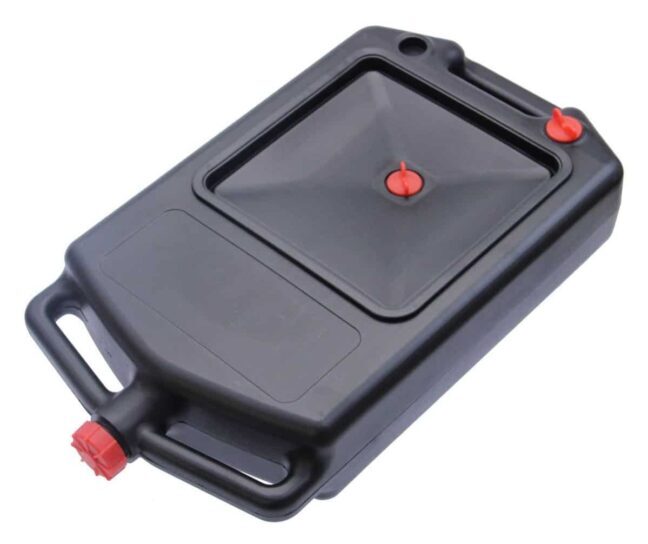
High-Performance Transformer oil Drip Trays with 10-Litre Capacity
Product Description
The 10-litre transformer oil drip trays are essential for anyone who regularly changes oil in transformers or electric coils. These portable trays are specifically designed to simplify the oil change process. At the same time, they help keep your work area clean. Their slim design makes them particularly suitable for low oil drain taps with limited ground clearance.
These trays are constructed from robust and durable plastic. They can withstand temperatures up to 60°C. Additionally, they offer excellent resistance to a wide range of solvents. This includes acids, alkalis, alcohol, oil, petrol, chemicals, and antifreeze. Their impact-resistant design ensures a long service life. Plus, the 10-litre capacity provides ample space for used oil.
The trays feature a concave drainage surface. They come equipped with three openings, each fitted with secure caps to prevent accidental spills. The bright red color of the caps makes it easy to identify the outlet openings, even in busy work environments. Furthermore, three sturdy carrying handles are integrated into the design. This allows for safe and easy transport when the tray is full.
Instructions for Use
- Before starting the oil change, loosen both red wing screws to expose the outlet openings.
- Position the transformer oil drip tray under the oil drain of the transformer or e-coil. Make sure the depression covers the oil drain point.
- Once the tray is full, dispose of the waste oil safely at an authorized waste oil collection point. This helps prevent environmental pollution.
The state-of-the-art 10-litre drip tray makes changing oil effortless and efficient. Additionally, it is designed to be environmentally friendly.
We offer you advice on the topics of: Transformer oil | Oil sampling | Drip tray
Moisture measurement in oil | ST-200 Sensor
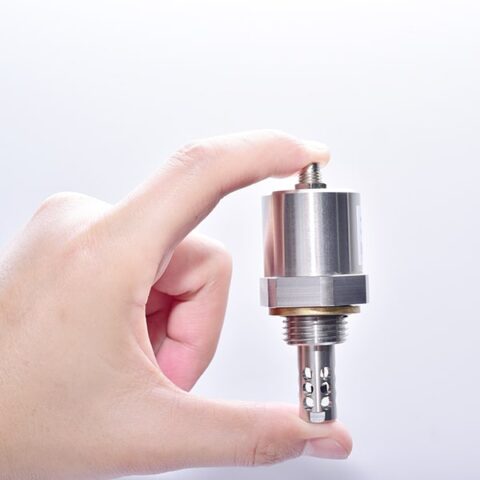
The ST-200 Moisture measurement in oil Sensor is a high-precision tool for measuring moisture in oil online. It uses WGM Support technology, giving it exceptional sensitivity to changes in water content. This allows accurate, real-time monitoring of oil quality, which is essential for reliable equipment performance.
The sensor is highly sensitive to water contamination. It can detect dissolved, free, and emulsified water. Its wide test range of up to 1015 allows accurate readings in varied conditions. Unique grounding technology enhances reliability and durability, while the sensor’s advanced design makes cleaning easy.
The ST-200 meets international standards and is suited for commercial and industrial environments. It provides continuous, 24/7 oil quality monitoring to keep essential equipment safe. By enabling preventive maintenance, it helps avoid costly downtime and reduces expenses due to oil quality issues. Additionally, it lowers oil change and disposal costs, promoting environmentally friendly operations.
The Moisture measurement in oil is widely used in industries such as oil production, refineries, power plants, power transmission, construction machinery, aviation, transportation, steel and metallurgy, oil storage, and manufacturing. It works with many types of oil, including lubricants, hydraulic oils, gear oils, engine oils, fuel oils, insulating oils, turbine oils, and both light and heavy oils.
The ST-200 pairs easily with the ST-200 indicator meter for precise monitoring of moisture and temperature. Warning points are flexible, and the built-in AC/DC module provides a stable 24V DC power supply. Together, these features form a complete solution for maintaining and monitoring oil quality in various industrial applications.
We would be happy to advise you on the following topics: Moisture Sensor | oil quality sensor | oil moisture and water activity.
Oil Testing | DÖPEV | Oil Sampling Control
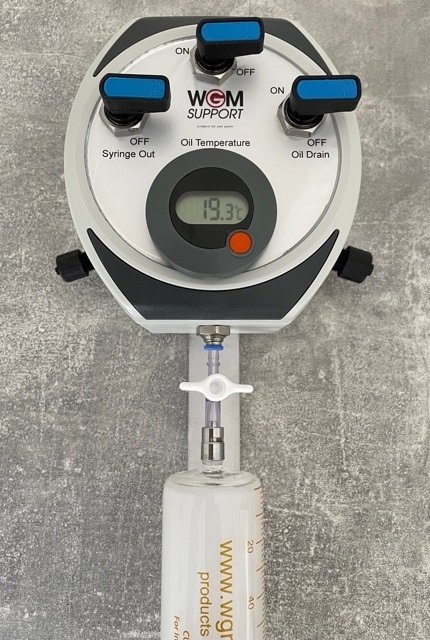
DÖPEV – the display oil sampling device with a twist for oil sampling according to DIN EN 60475 (VDE 0370-3).
Failures due to faulty transformer oil analysis can lead to negative and detrimental developments. They can evidently have serious effects on the power supply and the service life of the transformer. Sampling the oil from oil-filled transformers in operation is an efficient method for determining the condition of the solid and oil insulation. In addition to that, it provides information about the operating condition of the transformer.
And it does so without having to open or deactivate the transformer. Improper oil sampling or contamination can have an immense influence on the measured values of the individual test methods. Ultimately, this can lead to false conclusions about the quality of the insulating liquids. To ensure consistent performance and long transformer life, regular oil testing in installations is essential.
Taking oil samples without contamination
The overall aim is to remove the oil from a transformer without contamination. To further carry out an oil test in the laboratory and analyse the sample. Your result of the “gas in oil analysis” or the other “dielectric measurement methods” can only be as good as you have taken your oil sample. With the new oil sampling system DÖPEV you take the oil sample free of contamination. As well as according to the standard and without contact with the outside air.
ÖPEV-k and DÖPEV: undoubtedly the perfect oil analysis set
These periodic examinations are generally an important part of the maintenance of transformers for a safe power supply. Not only the sampling, but also the handling of the oil sample plays a major role. Sampling and handling are made very easy and effective with the ÖPEV-k and the DÖPEV. Basically, this allows you to carry out an insulating oil test in no time at all. The ÖPEV-k oil sampling device guarantees absolute ease of use for safe oil sampling from oil-filled transformers. In combination with the DÖPEV display oil sampling device, oil sampling becomes even easier.
By means of three ball valves on the DÖPEV you can regulate the oil sample. Furthermore, you can constantly control the temperature of the oil. The oil analysis device DÖPEV can be connected to the oil drain device ÖPEV-k and creates the perfect oil analysis set. With this set you can take the oil sample from the transformer comfortably and contamination-free. And in the next step, transport it to the oil test in the laboratory.
We offer you advice on the topics: Insulating oil sample | Oil testing | Oil analysis device
Distribution transformers | ÖPEV-k | Transformer oil drain tap
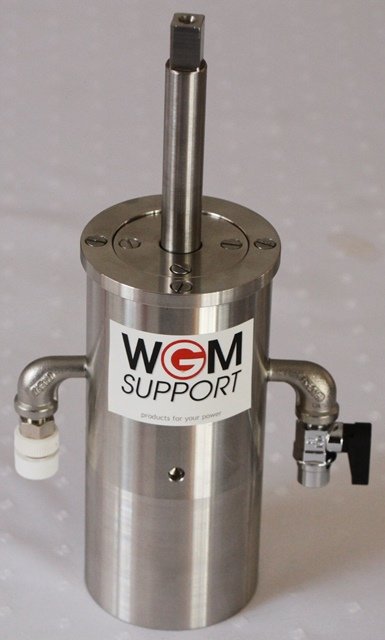
Oil filled distribution transformers are a very important part of the power supply, regardless of their size. By performing targeted inspections, maintenance, and servicing, it is possible to extend their service life. However, to properly analyze the contained insulating oil and draw a possible diagnosis, it is necessary to extract the oil correctly. If the insulating oil the transformer contains is faulty, this can in fact lead to serious consequences.
ÖPEV-k oil drain device for transformers
This therefore means that accurate results of insulating oil analysis are critical to the condition of the transformer. The results of an oil sampling additionally determine the further course of action with the oil transformer. In general, the ÖPEV-k is ideally suited for oil sampling, namely on an oil local network transformer. Or on distribution transformers that have a difficult or poorly accessible oil drain valve. On some transformers it is very complicated to take an oil sample. For example, on concrete or complete stations.
But ÖPEV-k guarantees absolute ease of use for safe oil sampling at the transformer. Adapters for the nominal width 22 NW and 31 NW are available as accessories. Consisting of stainless steel, the ÖPEV-k and the adapters thus come in a robust and compact design. The oil drain device ÖVEP-k is screwed onto the drain tap of the transformer with the adapter (for example NW 22). The shaft is then used to open the drain valve of the transformer and the ÖVEP-k fills with oil.
In total, there is an oil sampling tap and a vent valve on the ÖVEP-k. Consequently you can connect a hose to the oil transformer drain tap of the OVEP-k to remove the oil sample without contamination. WGM Support also offers a remote sampling kit to control the oil sample. In summary, the ÖPEV-k is the ideal and indispensable tool for effortless oil draining from oil distribution transformers.
We offer advice on the topics of: ÖPEV-k | DÖPEV | Oil sampling | Insulating oil analysis
Micro Ohm Meter | DLRO2 | Ohmmeter
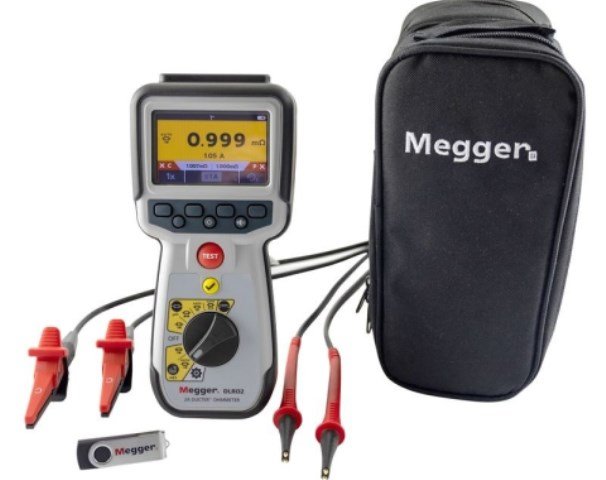
The Micro Ohm Meter DLRO2 is a rugged, portable 2 A micro ohm meter. It delivers fast, accurate and repeatable measurements – even in locations full of electrical noise. The DLRO2 joins a host of products that proudly carry the Ducter™ brand as the latest addition. Ducter™ testers are as well known and proven as Megger insulation resistance testers. Users in the power supply sector or industry get a high level of safety thanks to CAT III-600 V/CAT IV-300 V in accordance with IEC61010. In addition, the device is equipped with self-protection in case of accidental connection up to 600 V without tripping a fuse.
This saves valuable time that would otherwise be spent repairing or obtaining a replacement fuse. When working outdoors, IP54 protection ensures that neither rain nor dust will prevent testing. The DLRO2 is at home in a wide variety of applications, measuring low-resistance values on railroads and aircraft as well as industrial components. Thanks to dedicated long test leads to optimize output, even applications where long test leads are required are no problem for the DLRO2. The long test lead feature delivers up to 1 A of test current into 4 ohms of resistance.
This makes the DLRO2, with its optional test leads on cable reels, the ideal instrument for testing wind turbines and aircraft lightning protection applications. For testing smaller inductive loads, the DLRO2 can apply 2 A for at least 15 seconds, made possible by the integrated high-capacity batteries and a separate inductive load function. The batteries can be fully charged within 2.5 hours, minimizing downtime. Note: The DLRO2 is not intrinsically safe/ ATEX certified and must not be used in explosive environments.
We are happy to advise you on the topic: Microohm Test Equipment | Low Ohm Measurement | Micro Ohm Meter
Forklift Battery | BLE 600 | Batteries
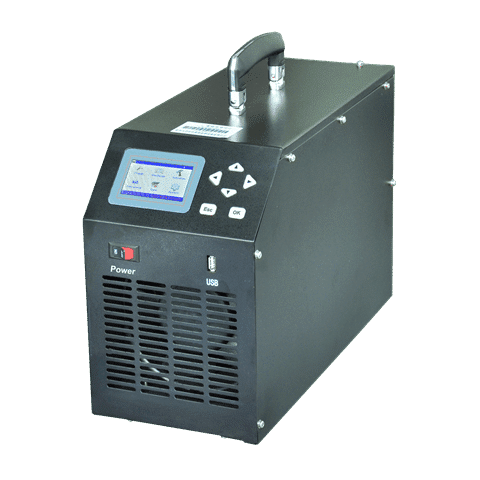
BLE 600: A Versatile Battery Management Device
The BLE 600 is a compact 3-in-1 device designed for charging, discharging, and activating lead acid or nickel-cadmium (NC) batteries. It is ideal for forklift batteries and battery charging systems used in uninterruptible power supplies (UPS), emergency lighting systems, and central battery systems. Thanks to its small size, the BLE 600 is a portable and convenient tool for regular maintenance of single cells, especially older ones, with voltages of 1.2V, 2V, 4V, 6V, 8V, and 12V.
Flexible Functionality for Battery Maintenance
The BLE 600 can perform its three functions—charging, discharging, and activating—either separately or simultaneously. This flexibility enables users to effectively maintain forklift batteries while streamlining overall service. When used together, the charging and discharging functions can charge and discharge the batteries in one or multiple circuits using a low constant current. The device can even perform these operations multiple times individually.
Regeneration and Monitoring Capabilities
The activation function repairs damaged material on the battery electrode plate, correcting any malfunctions and thereby regenerating the battery. This process increases the capacity of the forklift battery. Additionally, as a battery load simulator, the BLE 600 checks the battery’s discharge status and can conduct capacity tests to accurately determine the actual capacity of the battery systems.
By regenerating forklift batteries, the BLE 600 enhances their efficiency and optimizes resource usage. It also allows for long-term monitoring of battery conditions, continuously checking the traction battery to prevent serious damage over time. The device features a user-friendly interface with both touchscreen and keyboard controls. Furthermore, it includes a direct USB drive for easy data transfer to a PC. Software updates can be completed quickly, and users can download reports in Excel format at any time.
We offer you advice on the following topics: Stationary batteries | Battery | Battery charging / discharging.
Battery Impedance Tester | Battery Test | BITE 3
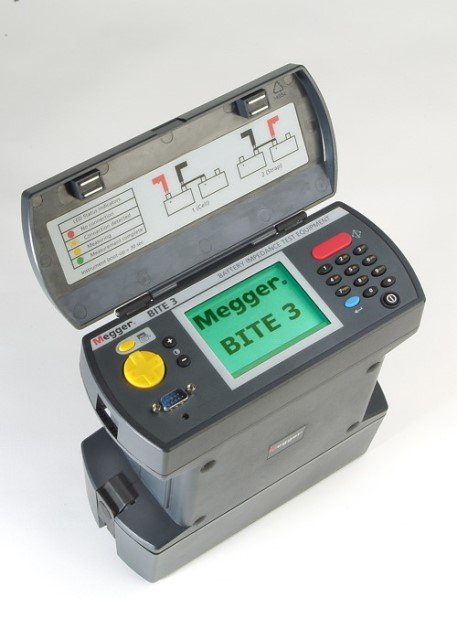
The Megger BITE 3 battery impedance tester measures key parameters for assessing the condition of lead-acid batteries with a capacity of up to 2,000 amp-hours. The measured values include cell impedance, cell voltage, and cell junction resistance. Additionally, the BITE 3 performs an internal ohmic test.
For the first time in a device of this kind, the BITE 3 also measures trickle charge current and superimposed AC current. An integrated spectrum analyzer displays the harmonic content of the AC current. The device’s firmware is internet-capable and can be updated; it also supports multiple languages.
The BITE 3 is particularly user-friendly, making it ideal for the regular inspection of lead-acid batteries. It measures internal impedance, junction resistance, cell voltage, as well as trickle charge current and ripple current. These values, together with temperature, specific gravity, and other battery parameters, enable a comprehensive assessment of battery condition—from terminal to terminal—and, to some extent, of the charger (specifically, the superimposed AC current and its harmonic components).
Megger recommends incorporating the BITE 3 as part of a comprehensive battery maintenance program:
- For lead-acid batteries, a semi-annual inspection is advisable,
- For VRLA batteries, a quarterly check is recommended.
Overall, the BITE 3 is among the easiest and most reliable devices for monitoring batteries and chargers.
We will be happy to advise you on the subject: Battery measurement | Battery testing | Battery capacity test.